A principal design critic you can run on every screen
Point it at a screenshot, a Figma frame, a live URL or a prototype. It measures the real thing, holds it to one rubric, and hands back a scored, pinned, printable audit.
I wanted a consistent way to raise the bar on the work we make with AI assisting us — grounded in design and psychology principles, with industry references that justify every assessment and every change it asks for.
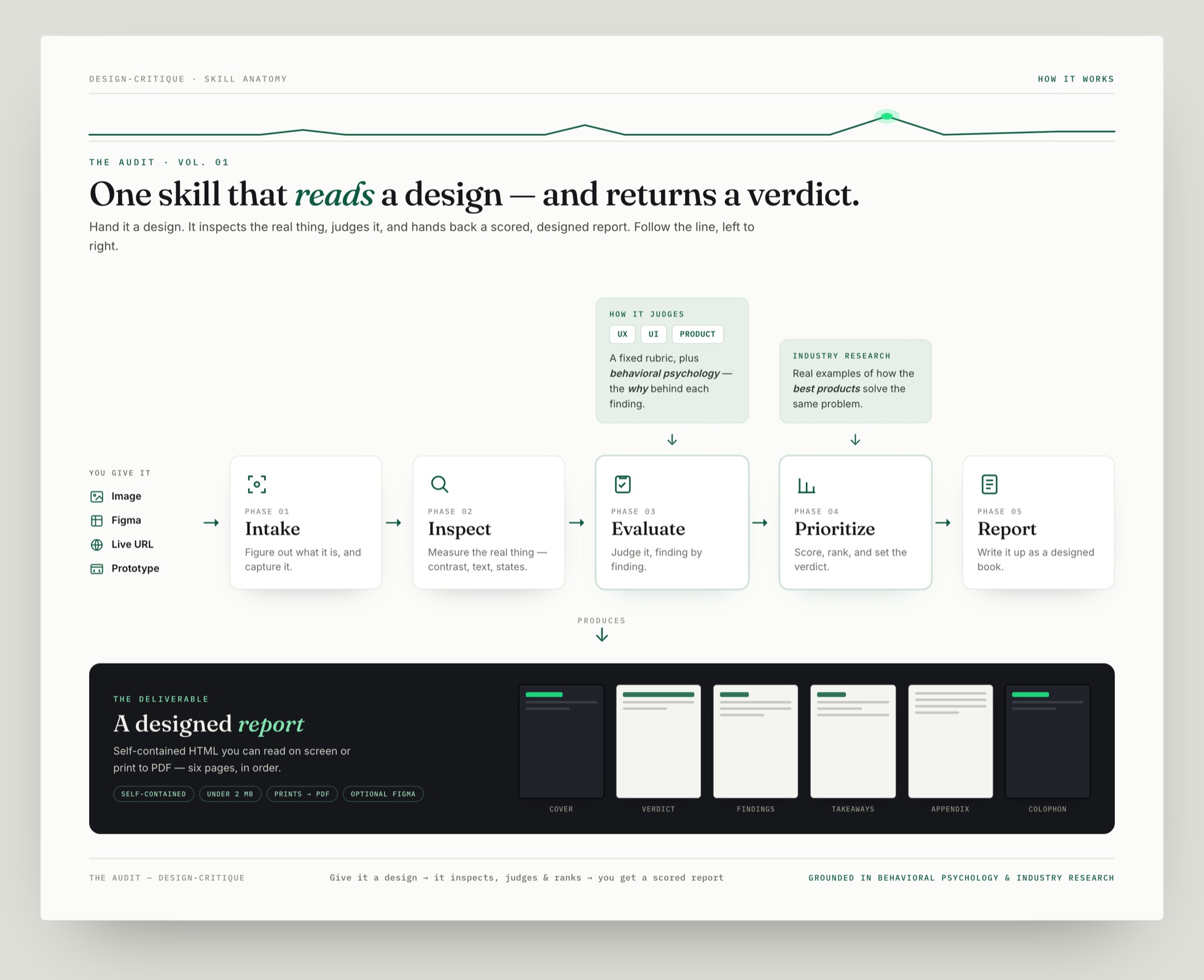
Three things it adds to every critique
Industry references, design psychology, and a test for what’s obvious — so our work is held to the principles we care about, not a generic checklist.
-
A
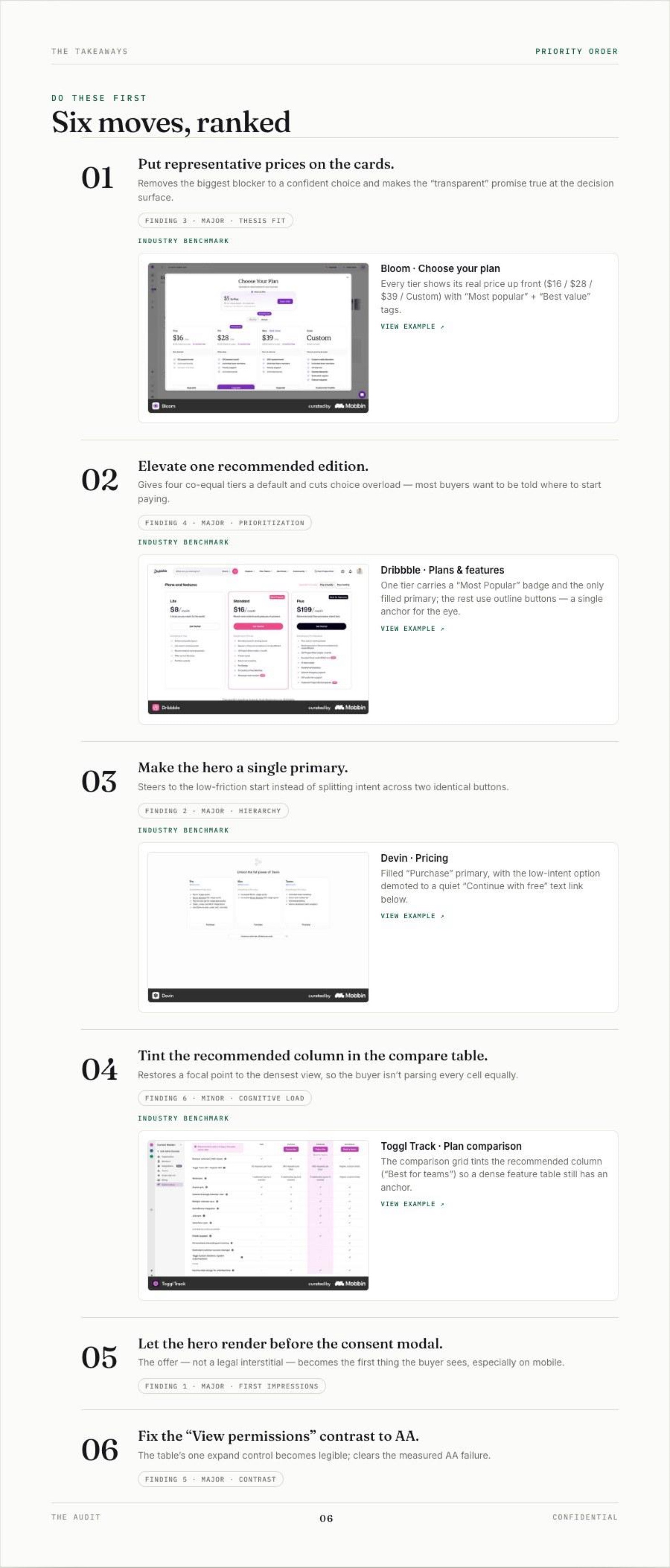
Backs the fixes with industry references Via the Mobbin MCP, each top fix carries a real screen from a strong product solving the same problem.
-
B
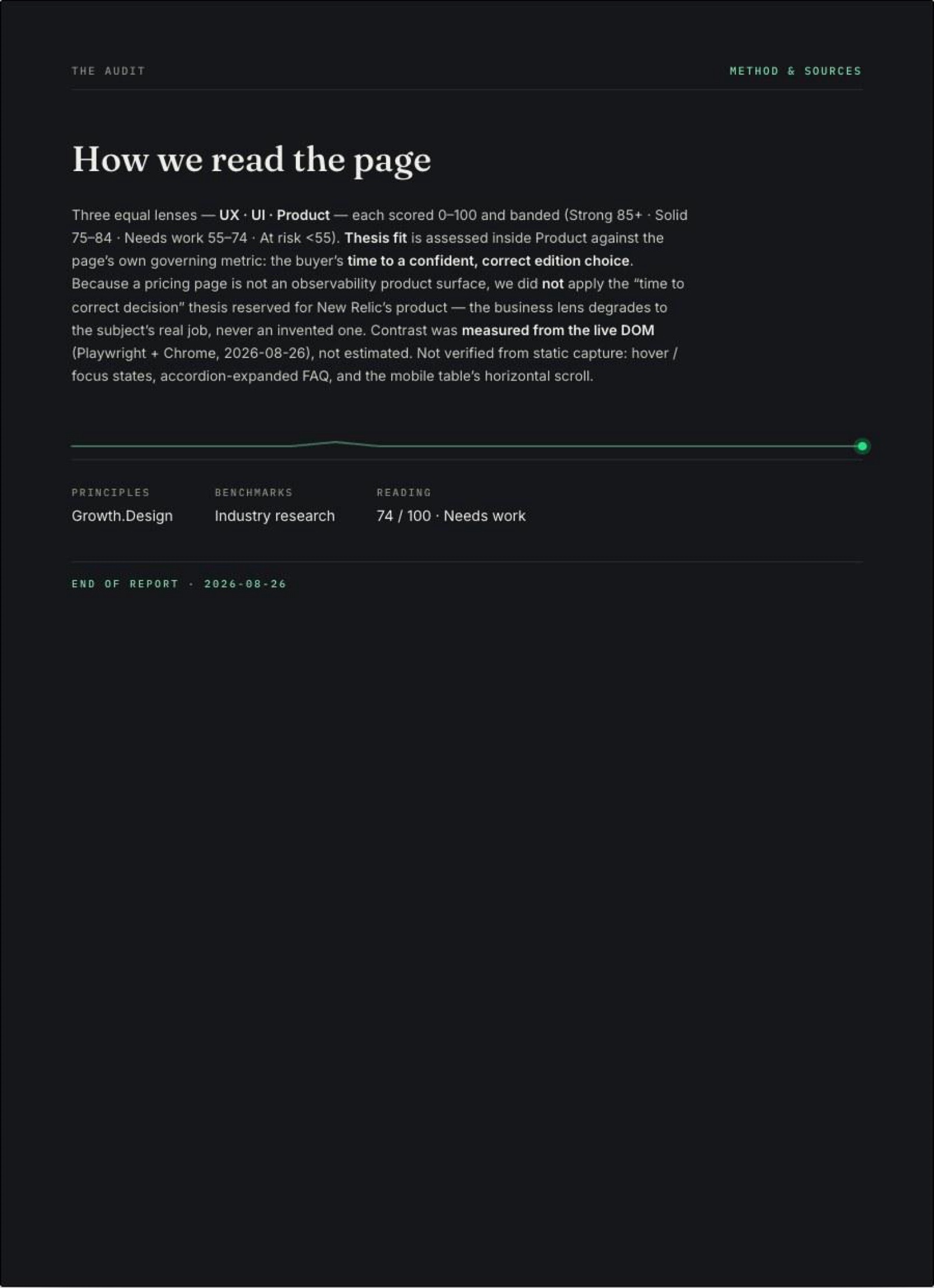
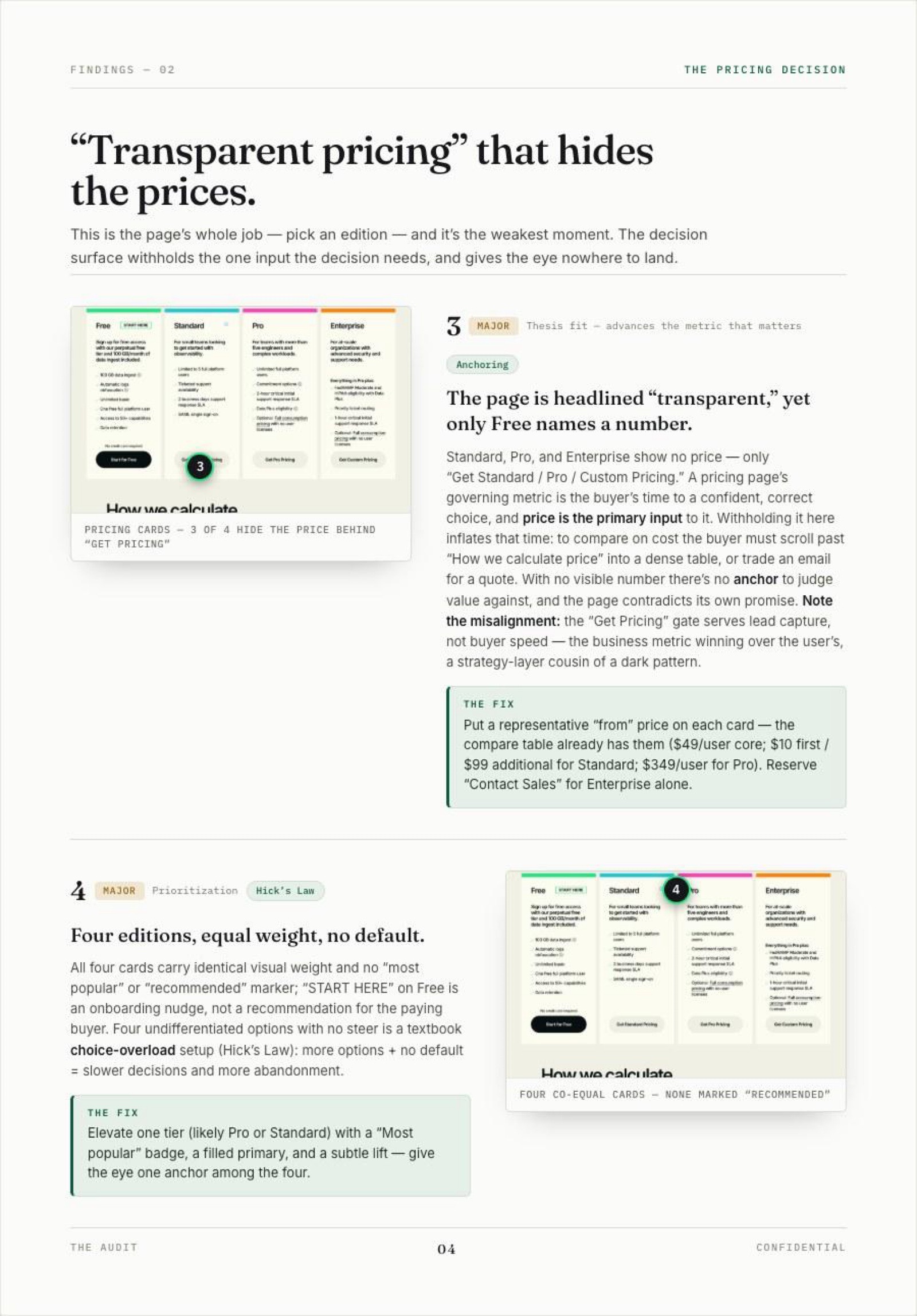
Grounds the why in design psychology Findings cite principles from Growth.Design’s library of 106 — Anchoring, Hick’s Law, Cognitive Load — wherever the fit is strong.
-
C
Makes the next step obvious On dense observability screens, every key surface should make clear what to take away and what to do next — shrinking time to correct decision.
Backs every finding with evidence
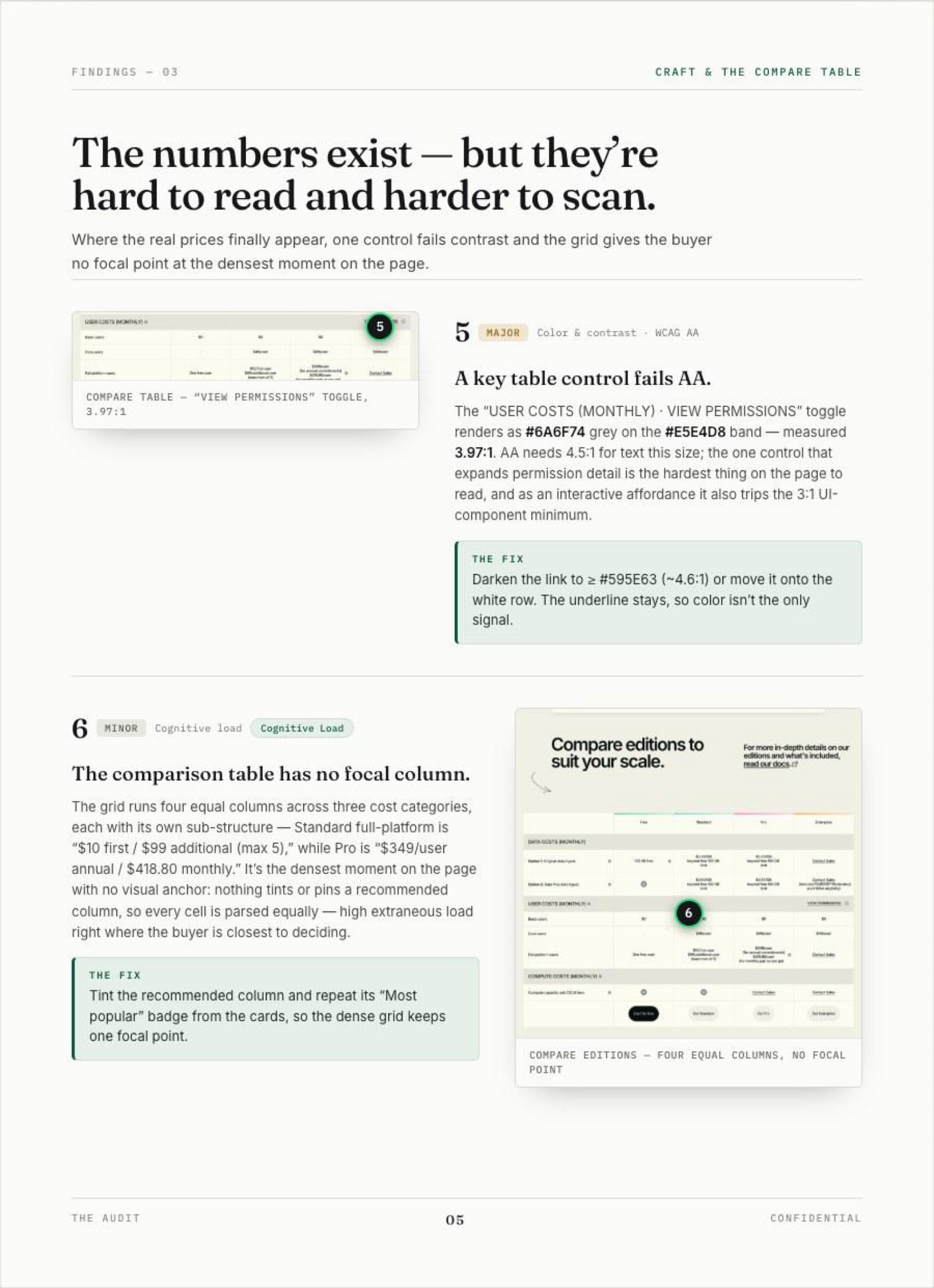
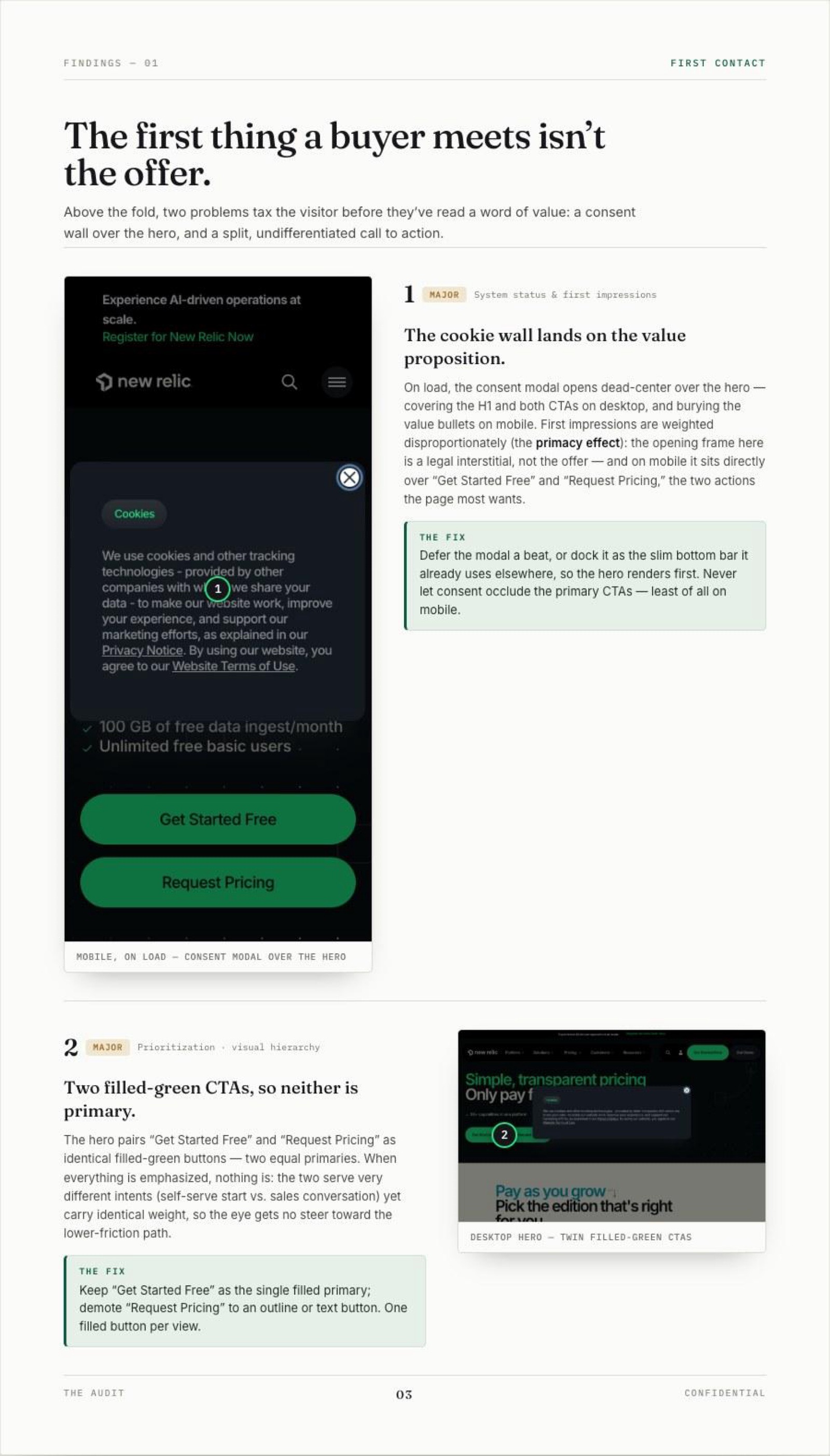
Each finding runs Issue → Why it matters → Fix, pinned to the screen and backed by a measurement: the actual hex, the measured contrast ratio.
Holds craft to the metric that matters
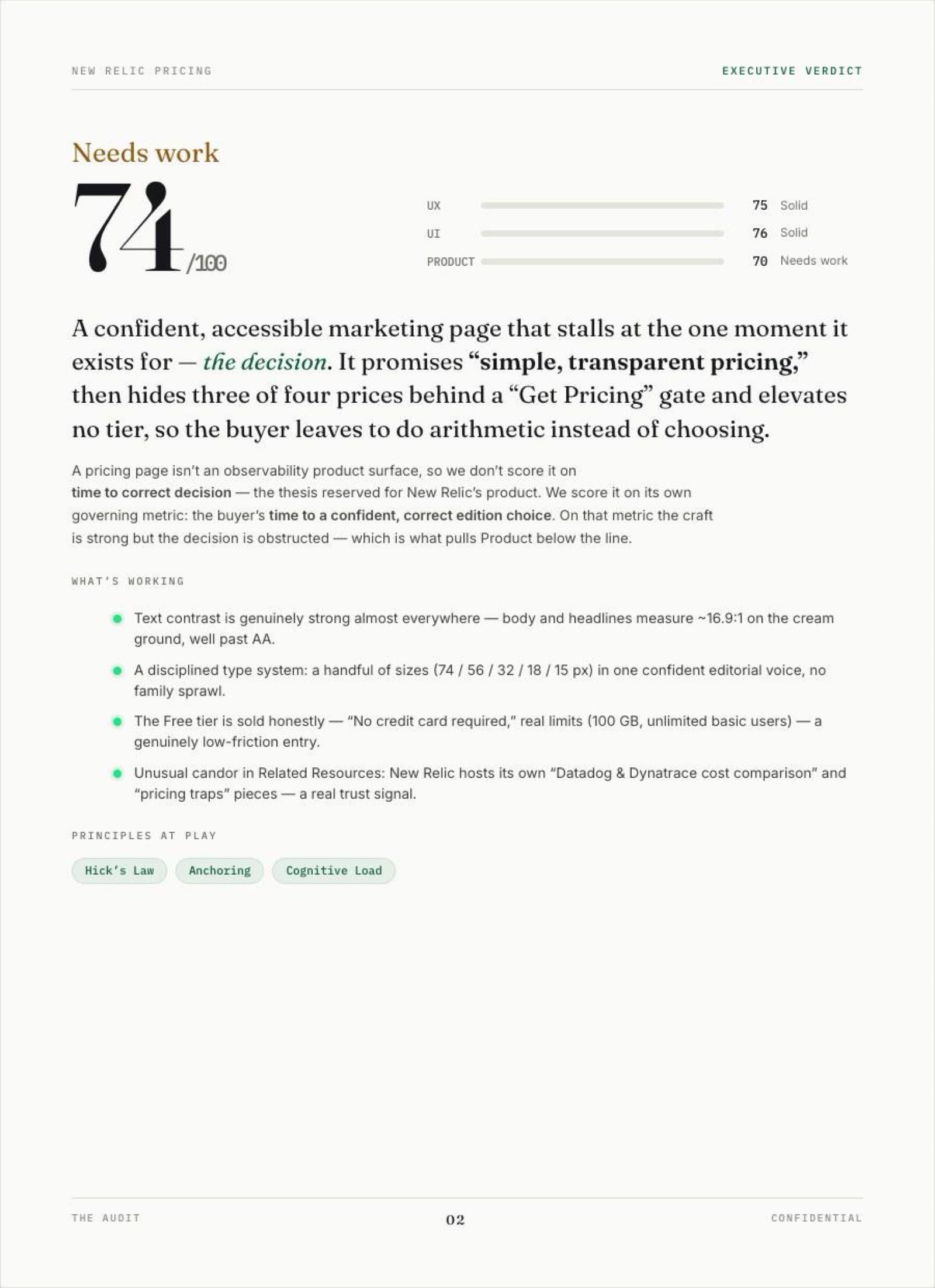
For observability, that metric is time to correct decision. Anything else is held to its own job — for the pricing page, a confident edition choice.
Time to correct decision.
Credits screens that end in a decision. Read as a direction, never a fake score.
Delivers a report to read, not a fix to accept
A PDF rather than an HTML page, on purpose: something everyone can open, look at and pass around. The critic can misread a page, miss the goal, or flag something the team did deliberately — so people check its understanding before anything changes.
We wanted it to be something someone spends time thinking about, reading and looking at — not something you see on screen and just hit go.
-
A
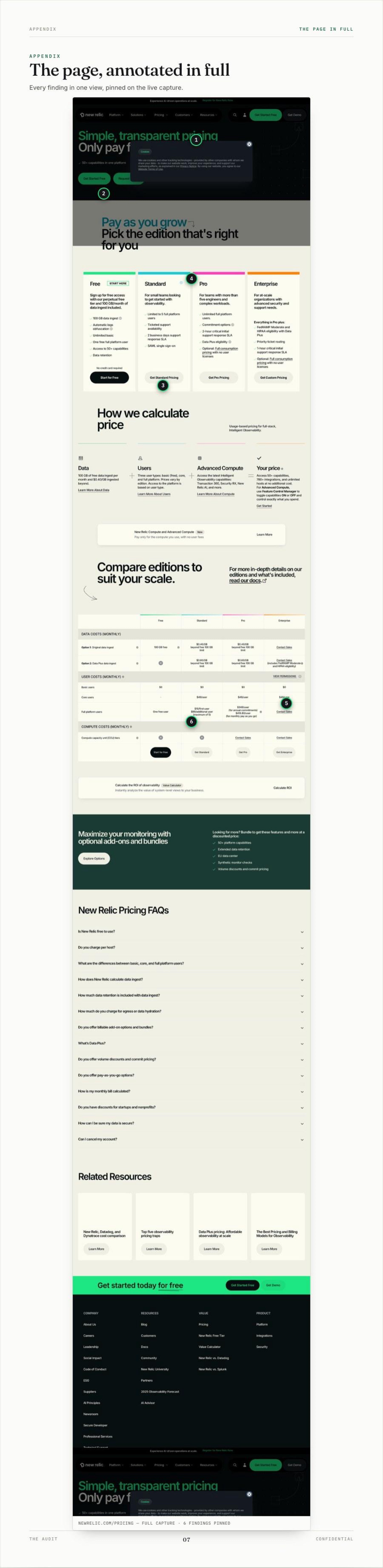
Pins every finding to the screen it’s about A cropped plate of the real capture, a numbered pin, and the fix alongside.
-
B
Names what’s working, too Every verdict opens with the three or four things the design gets right.
-
C
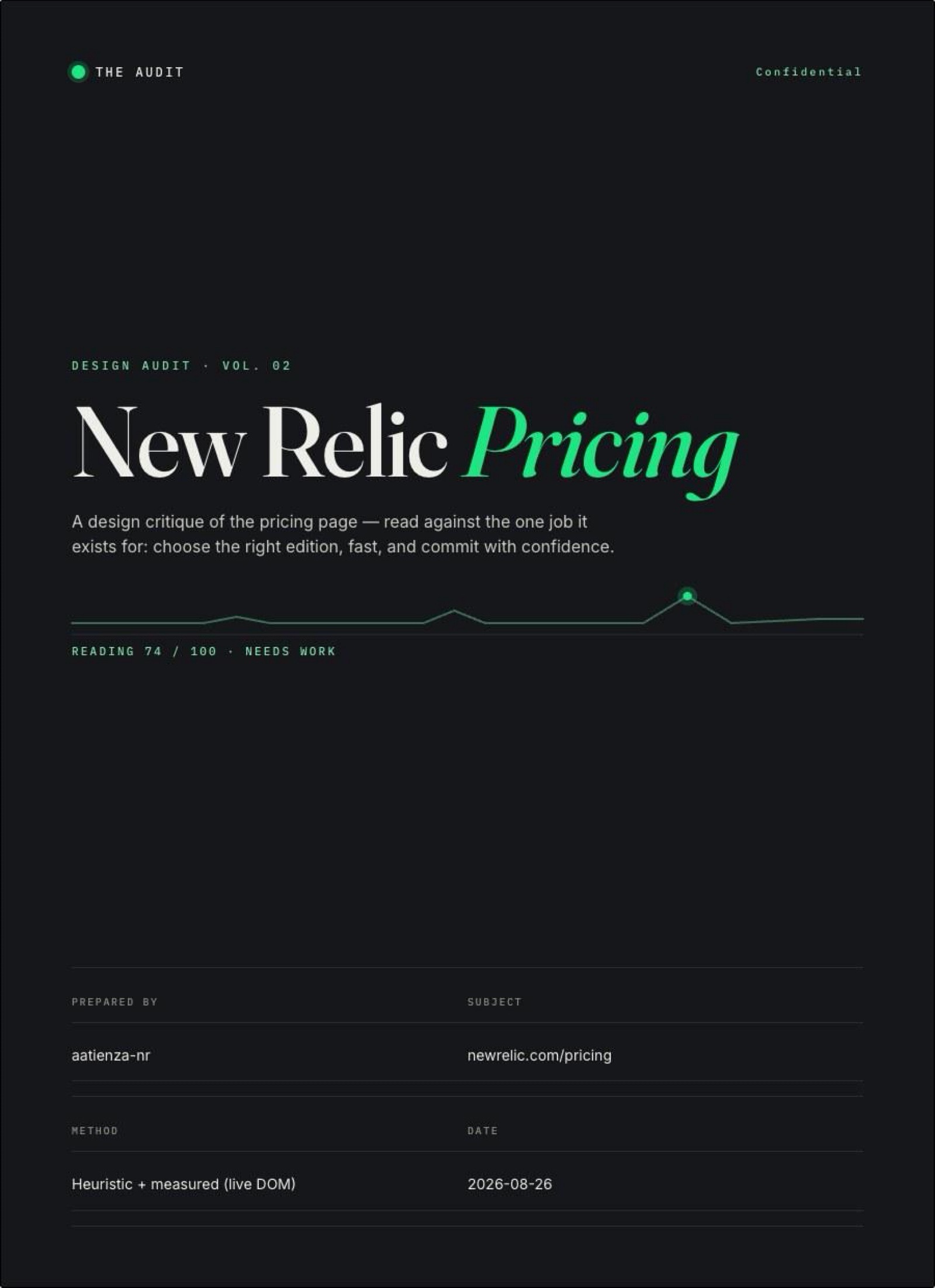
Made to be passed around A PDF anyone can open, one section per page — easy to share, print and talk through as a team.
Still in refinement. The goal is for it to be part of every designer’s workflow — keeping the designer as the human in the loop, and in the driver’s seat.
- 50+designers it’s been shared with so far
- Humanin the loop, and in the driver’s seat — the critic advises, the designer decides
- AI-firsta key piece of our design transformation